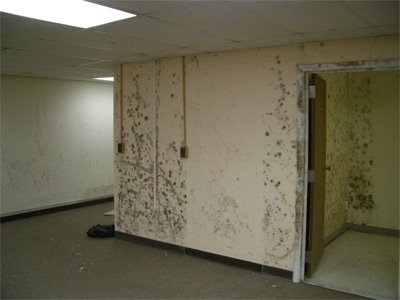
Visible mold is evidence of a moisture problem, not merely a dirty surface. The durable fix is to identify whether the water comes from a leak, bulk water entry, condensation, high indoor humidity, poor drainage, or an HVAC problem—and correct that source before repairing finishes.
Mold spores are common indoors and outdoors. It is not practical to eliminate every spore from a normal building. What can be controlled is the moisture that allows growth. Painting over a stain, spraying fragrance, or running a dehumidifier without understanding the water path may improve appearances temporarily while damage continues behind the surface.
Use location and timing as diagnostic clues
| Where or when it appears | Possible moisture mechanism | First checks |
|---|---|---|
| After rain, near ceiling or exterior wall | Roof, flashing, cladding, window, or wall penetration leak | Weather timing, roof and flashing condition, exterior drainage path |
| Under sink or below bathroom | Supply, drain, fixture, or waterproofing leak | Meter movement, fittings, traps, caulk, flooring and subfloor condition |
| On cold windows or exterior corners in winter | Condensation from high humidity and low surface temperature | Indoor RH, outdoor temperature, window condition, insulation and airflow |
| On supply registers or cold ducts in summer | Condensation on cold surfaces, air leakage, or insulation defects | Dew point, duct insulation, boot sealing, airflow and attic/crawl conditions |
| In closets behind furniture | Limited air circulation and cold surfaces | Furniture clearance, wall temperature, RH, exterior insulation |
| Basement lower wall or floor edge | Groundwater, capillary moisture, foundation leak, or condensation | Grading, gutters, drainage, vapor source, seasonal pattern |
| Near HVAC equipment | Blocked condensate drain, dirty pan, poor trap, icing, or cabinet leakage | Pan and drain condition, filter, airflow, operating cycle |
Relative humidity is useful, but dew point explains condensation
Relative humidity (RH) describes how close air is to saturation at its current temperature. Warm air can hold more water vapor than cool air, so RH changes when temperature changes even if the amount of moisture remains the same. Dew point is the temperature at which that air becomes saturated and water begins condensing on a surface.
EPA recommends keeping indoor RH below 60 percent and ideally around 30 to 50 percent when possible. That is a practical range, not a guarantee that every surface remains dry. If indoor air has a dew point above the temperature of a cold duct, pipe, window, or wall section, condensation can still occur locally.
| Indoor reading | What it may mean | Appropriate response |
|---|---|---|
| 30–50% RH | Common target range in many occupied buildings | Continue monitoring; still inspect localized cold surfaces or leaks |
| 50–60% RH | Higher moisture load; condensation risk rises on colder surfaces | Improve source control and exhaust; assess HVAC runtime and infiltration |
| Above 60% RH for extended periods | Conditions more favorable to condensation and mold | Find moisture source promptly; use dehumidification as part of a plan |
| Very low winter RH | Dry air, excessive ventilation or leakage, or measurement issue | Verify meter and building conditions before adding humidification |
| Normal room RH but wet spot | Local leak, cold bridge, trapped air, or wet material | Investigate the assembly rather than dismissing the observation |
Measure before opening walls
Use more than one observation. Record indoor temperature and RH in affected and unaffected rooms, outdoor weather, HVAC operating mode, rainfall, showering and cooking, and when staining changes. Inexpensive humidity meters can drift, so compare instruments or check them against a known reference before making an expensive decision.
Moisture meters can help compare materials, but readings depend on meter type, material, salts, temperature, and depth. Thermal cameras show surface-temperature patterns, not mold and not moisture directly. A cool area may be missing insulation, air leakage, a framing member, or evaporation. Confirm with visual inspection and appropriate measurement.
Control moisture sources in the right order
- Stop bulk water. Repair active roof, plumbing, foundation, window, or appliance leaks.
- Dry wet materials quickly. EPA advises drying damp materials as soon as possible, ideally within 24–48 hours. Porous materials that cannot be cleaned and dried may need removal.
- Exhaust moisture at the source. Vent bathrooms, clothes dryers, and cooking equipment correctly to outdoors where required.
- Manage indoor humidity. Use correctly sized cooling, dehumidification, ventilation, and operating controls.
- Raise cold surface temperatures where appropriate. Correct missing insulation, duct sweating, air leakage, and thermal bridges with an assembly-specific design.
- Clean or remove affected material safely. Match the method and containment to material, area, occupants, and applicable guidance.
- Verify over time. Recheck after rain, seasonal weather, and normal occupancy.
How HVAC can help—or make humidity worse
Air conditioning removes moisture when warm, humid air contacts a cold evaporator coil and condensate drains away. Adequate runtime, airflow, coil temperature, drainage, and controls all matter. An oversized system may satisfy the thermostat quickly and cycle off before removing enough moisture, particularly during mild but humid weather.
Low airflow can make a coil excessively cold and may lead to icing; high airflow may reduce moisture removal in some conditions. A dirty filter, blocked coil, blower problem, incorrect charge, poor duct design, or control setup requires qualified diagnosis. Never assume high humidity proves the system needs refrigerant.
Duct leakage can pull humid attic, crawl-space, garage, or outdoor air into the return side, while supply leakage can depressurize the house and increase infiltration. Cold supply boots or ducts may sweat if insulation is missing or humid air reaches the cold surface. Seal and insulate the correct boundary rather than covering wet material.
Ventilation is not simply “more air”
Bathroom and kitchen exhaust remove concentrated moisture and pollutants. Whole-house ventilation dilutes indoor contaminants, but outdoor air can add a significant moisture load in hot-humid weather or dry the house in winter. The system must be designed and controlled for climate, occupancy, building tightness, and HVAC operation.
Opening windows may help when outdoor air is drier in absolute terms and conditions are safe. It can worsen humidity when the outdoor dew point is high. Use weather and dew point, not only outdoor RH, to judge.
Cleaning small areas versus professional remediation
EPA’s homeowner guidance generally emphasizes fixing moisture and cleaning small areas on hard surfaces with water and detergent, followed by complete drying. Porous materials such as ceiling tile, insulation, and some wallboard may not be cleanable after significant growth. Bleach is not a substitute for correcting the source and is not appropriate for every material or situation.
| Situation | Possible homeowner action | Reason to seek professional help |
|---|---|---|
| Small, accessible area on a cleanable hard surface | Correct moisture, use suitable protective equipment, clean with detergent, dry fully | Sensitive occupants, uncertain material, or recurring growth |
| Large or widespread growth | Avoid disturbing it unnecessarily | Containment, removal, drying, and cause investigation may be complex |
| Sewage or contaminated water | Keep occupants away | Biological contamination requires specialized procedures |
| Inside HVAC equipment or suspected ducts | Turn off affected equipment if operation spreads contamination and it is safe to do so | System cleaning and moisture correction require HVAC and remediation judgment |
| Hidden growth, structural damage, or repeated return | Document timing and conditions | The source or affected extent has not been identified |
| Health symptoms | Reduce exposure | Consult an appropriate healthcare professional; do not use a building article for diagnosis |
Common fixes that fail
Painting over damp drywall traps the evidence without drying the assembly. Running a portable dehumidifier while a dryer vents indoors treats the symptom while adding moisture continuously. Closing supply registers in a damp room can reduce circulation and alter system airflow. Lowering the thermostat excessively may cool surfaces and increase condensation while wasting energy.
Replacing windows without examining exhaust, insulation, and indoor moisture may move condensation to another cold surface. Encapsulating a crawl space without drainage, ground vapor control, combustion planning, and conditioning can also exchange one moisture mechanism for another.
A record that helps solve recurring problems
Photograph the location with dates, log temperature and RH, note rainfall and HVAC operation, and keep repair invoices. Mark the boundary of a stain lightly only if doing so does not damage the finish. A pattern tied to rain suggests a different investigation from one tied to showers, cooling cycles, or the first cold week of winter.
The key is not to identify the species by color. Color does not reliably establish toxicity or required response. Determine how water reaches the material, stop it, dry the assembly, remove material that cannot be restored, and confirm that conditions remain controlled.