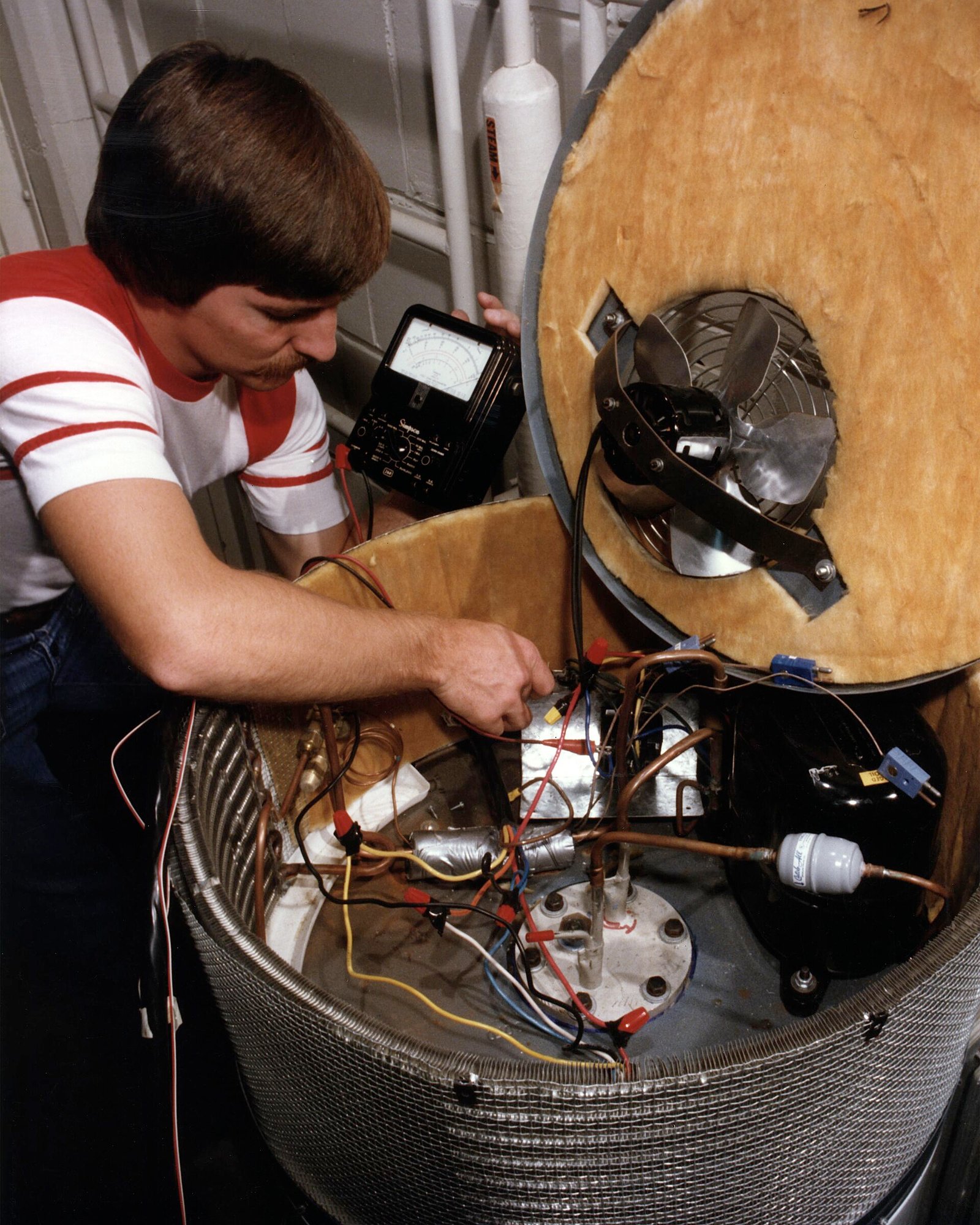
A heat pump water heater can cut water-heating electricity use dramatically, but it is not a drop-in winner for every house. The right choice depends on installation space, climate, hot-water demand, noise, condensate drainage, electrical service, and local utility rates.
If your conventional electric tank is approaching the end of its life, the replacement decision is worth making before it leaks. A standard electric resistance water heater is simple, quiet, compact, and relatively inexpensive to buy. A heat pump water heater (HPWH), sometimes called a hybrid electric water heater, costs more and needs more planning, but it moves heat from the surrounding air into the tank instead of creating all its heat with electric resistance elements. That difference can produce meaningful long-term savings.
How the two technologies heat water
A resistance water heater sends electrical current through one or two heating elements inside the tank. Nearly all of that electrical energy becomes heat in the water, but one unit of electricity produces only about one unit of heat. The technology is straightforward and its performance is largely independent of the air around the tank.
An HPWH uses a refrigeration cycle. A fan pulls room air across an evaporator, refrigerant absorbs heat from that air, a compressor raises the refrigerant temperature, and a condenser transfers the heat to the stored water. Most units retain resistance elements for high-demand periods, cold conditions, fault protection, or a user-selected boost mode. That is why they are often marketed as “hybrid” models.
Moving heat can be much more efficient than producing it directly. ENERGY STAR says a certified HPWH uses about one-quarter of the energy of a standard electric model under its comparison assumptions. Actual household savings will vary with water use, tank size, mode selection, installation temperature, electricity price, and how often the backup elements operate.
| Decision factor | Heat pump water heater | Standard electric tank |
|---|---|---|
| How heat is produced | Moves heat from surrounding air; resistance elements provide backup | Produces heat directly with resistance elements |
| Typical purchase price | Higher | Lower |
| Electricity use | Usually much lower when operating mainly in heat-pump mode | Higher for the same hot-water demand |
| Installation space | Needs adequate air volume, temperature, clearances, and condensate disposal | Fits more constrained locations and produces no condensate |
| Sound | Fan and compressor are audible | Nearly silent except for normal water sounds |
| Effect on room | Cools and dehumidifies surrounding air | Little direct effect on room temperature or humidity |
| Recovery behavior | Efficient mode can recover more slowly; hybrid mode adds resistance heat | Predictable resistance-element recovery |
| Complexity | More components and maintenance considerations | Simpler equipment and broad service familiarity |
Start with the installation room
The installation space is the first screening test. ENERGY STAR buying guidance says many HPWHs work best in interior locations that remain roughly 40°F to 90°F year-round and provide about 1,000 cubic feet of surrounding air, unless the manufacturer allows ducting or a different configuration. Always use the selected model’s manual rather than treating those figures as universal.
A large basement, garage in a mild climate, utility room, or mechanical room with waste heat can be a good location. A tiny closet may not be. When an HPWH extracts heat, it discharges cooler, drier air. In a warm basement that cooling and dehumidification may be welcome. In a conditioned room during winter, some of the heat may ultimately come from the home’s heating system, reducing part of the net benefit. Ducted intake or exhaust can change that interaction, but duct design introduces pressure, airflow, noise, and installation requirements.
Measure the room, door openings, ceiling height, service clearances, and the route used to bring the old and new tanks through the building. HPWHs are frequently taller than conventional tanks because the heat-pump assembly sits on top. Check whether pipes, shelves, stairs, or a low ceiling interfere with installation or future service.
Plan for condensate, noise, and airflow
Because the evaporator cools air below its dew point, the unit produces condensate. It needs an approved drain, condensate pump, or other manufacturer-permitted disposal method. The line should be protected from blockage and freezing, and it should not create water damage if a pump fails. A drain pan and leak detection may be prudent or required locally, especially above finished space.
An HPWH also contains a fan and compressor. It is not silent. Published sound ratings help, but room construction and vibration paths matter. A unit beside a bedroom, office, or quiet living area may be more noticeable than the same unit in a basement. Avoid enclosing it impulsively to reduce noise; restricting its airflow can reduce efficiency or cause operating problems.
Size for the household’s real hot-water pattern
Tank capacity alone does not describe hot-water performance. The first-hour rating estimates how much hot water a fully heated unit can provide during a high-demand hour. Compare that rating with simultaneous showers, baths, laundry, dishwashing, and the number of occupants—not simply the capacity of the old tank.
A larger tank can let the efficient heat-pump section recover gradually while covering short peaks from stored water. A tank that is too small may rely on resistance elements more often, reducing savings. On the other hand, an unnecessarily large tank costs more, occupies more space, and has greater standby surface area. Ask for a sizing explanation based on fixtures and usage pattern.
Operating modes matter. “Heat pump only” usually maximizes efficiency but may recover more slowly. “Hybrid” or “auto” allows resistance assistance. “High demand” prioritizes recovery, and “vacation” reduces unnecessary operation during an absence. Names and behavior vary by manufacturer, so compare manuals rather than assuming every control works the same way.
Compare energy cost without using a national average blindly
ENERGY STAR estimates that a certified HPWH can save a four-person household about $550 per year compared with a standard electric water heater under its published assumptions. That is a useful illustration, not a promise. Build a household estimate with the model’s Uniform Energy Factor, expected annual consumption, your marginal electricity rate, and realistic hot-water demand.
Include the complete installed price: tank, delivery, removal, plumbing changes, electrical work, condensate handling, permits, drain pan, seismic restraint where required, duct kit if used, and any service upgrade. Then subtract only incentives for which the project and household actually qualify. Tax rules and utility rebates change, so verify current requirements before purchasing equipment.
For a fair comparison, examine a consistent ownership period and include expected maintenance. The simple payback is the extra installed cost divided by estimated annual savings. Also consider warranty, local service availability, likely residence duration, and the cost of an emergency replacement if the existing tank fails.
| Cost item | Include in the HPWH quote? | Why it matters |
|---|---|---|
| Equipment, delivery, and old-tank removal | Yes | Prevents a low equipment-only price from distorting the comparison |
| Electrical circuit or panel work | If required | Model requirements may differ from the existing tank |
| Condensate drain or pump | Yes | The heat-pump section produces water during operation |
| Drain pan, leak sensor, and shutoff | As required or appropriate | Reduces the consequence of a tank, fitting, or drain failure |
| Plumbing, expansion control, and pipe insulation | Yes | Affects safety, reliability, and delivered efficiency |
| Permit and commissioning | Yes | Confirms the installed system—not just the tank—operates as intended |
| Verified incentive | Subtract after eligibility is confirmed | Programs, dates, contractors, and qualifying models can change |
Electrical and plumbing details can change the project
Many full-size HPWHs use a 240-volt branch circuit similar to a conventional electric tank, but breaker and conductor requirements are model-specific. Newer product categories may use different power arrangements. Never assume the existing circuit is suitable because both tanks are “electric.” A qualified installer should verify voltage, conductor size, overcurrent protection, disconnecting means, grounding, and applicable code requirements.
Plumbing details also affect efficiency and reliability. Insulating accessible hot-water piping reduces distribution loss. A thermal expansion tank may be required on a closed plumbing system. The temperature-and-pressure relief valve must discharge through an approved, unobstructed pipe to a safe location. Mixing valves, recirculation loops, water hardness, and local water quality can affect design and maintenance.
Comfort tradeoffs homeowners notice
The biggest advantage is lower electricity consumption when the unit spends most of its time in heat-pump mode. Additional benefits can include dehumidification and reduced heat in a warm mechanical room. The tradeoffs are fan noise, cool exhaust air, slower recovery in the most efficient mode, more components, and a need for condensate management.
Cold inlet water and a cold installation room can increase recovery time or resistance-element use. A family with clustered morning showers may experience the equipment differently from a two-person household with spread-out demand. Controls can help, but scheduling should not compromise safe water temperatures or create conditions favorable to microbial growth. Follow the manufacturer and local health guidance.
Questions to put in every proposal
- What tank size and first-hour rating are being proposed, and what demand assumptions support them?
- Does the room meet the manufacturer’s temperature, volume, airflow, and clearance requirements?
- Where will condensate go, and what protects the building if the drain or pump fails?
- What is the published sound rating, and is the unit adjacent to a quiet room?
- Will the existing electrical circuit remain, be modified, or be replaced?
- Which operating mode was used for the savings estimate?
- Who provides warranty service locally, and what routine maintenance is required?
- Are permits, removal, drain pan, pipe insulation, expansion control, and commissioning included?
When a standard electric tank may still be reasonable
A resistance model can be sensible when the installation is extremely constrained, the household uses little hot water, electricity is inexpensive, noise is unacceptable, the property will be held only briefly, or the added work makes the HPWH uneconomic. It can also be the practical emergency replacement when a failed tank must be restored immediately—although advance planning is the best way to avoid that forced decision.
The conclusion should come from the house. An HPWH is strongest when it has a suitable room, a planned condensate route, enough storage for peak use, proper electrical service, competent local support, and years to accumulate savings. A conventional tank wins on simplicity and initial cost. Compare both as complete installed systems.