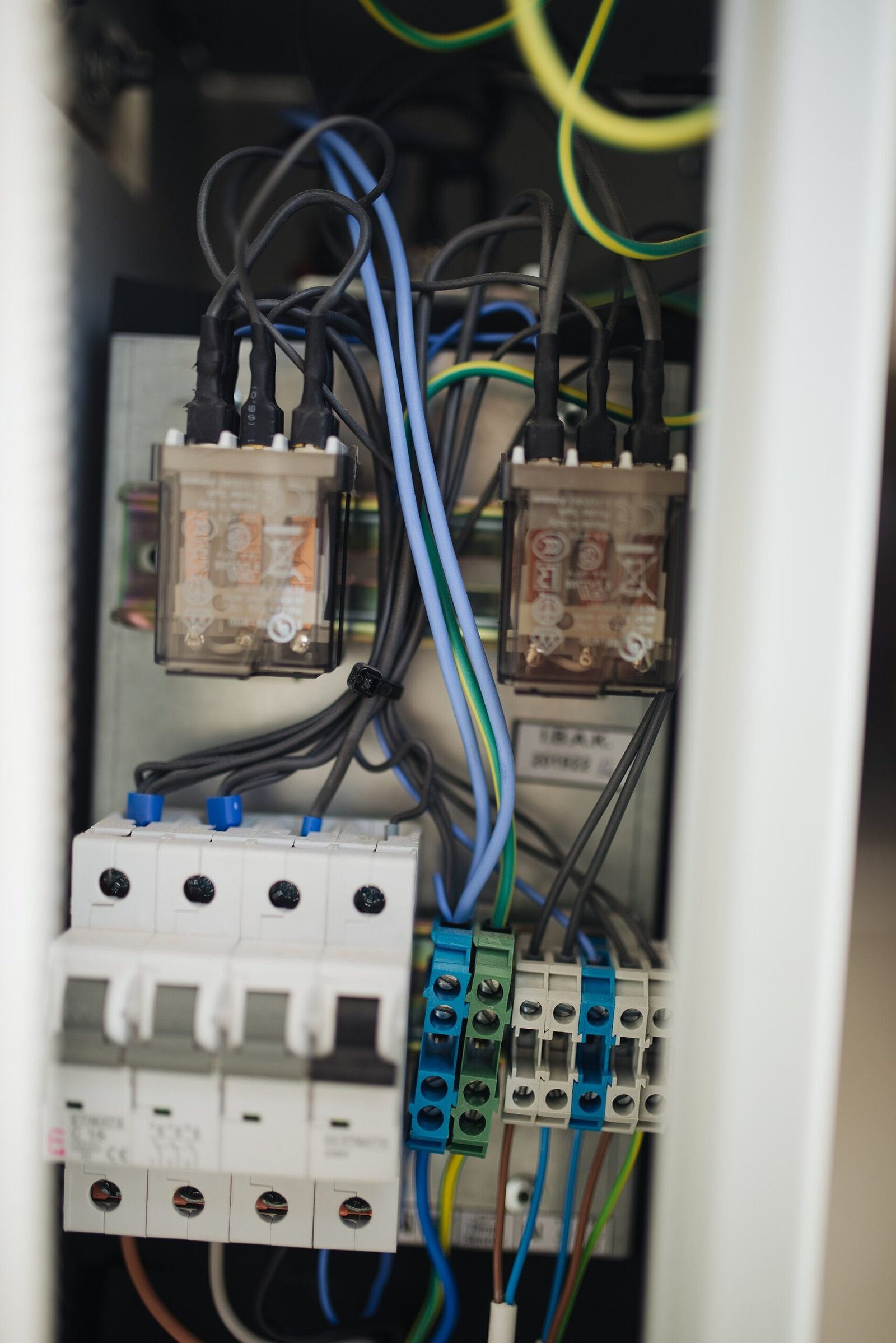
A whole-home surge protective device can reduce damage from many transient overvoltages entering or developing within a house. It cannot stop every lightning event, correct bad wiring, replace grounding and bonding, or protect every signal cable by itself.
Modern homes contain electronic controls in HVAC equipment, appliances, chargers, lighting, entertainment systems, security devices, garage-door operators, and networking gear. That makes surge protection a system-design question rather than a decision about one power strip. The most useful approach combines protection at the electrical service or distribution panel with appropriate point-of-use protection, correct grounding and bonding, and attention to communication lines.
What an electrical surge actually is
A surge is a brief increase in voltage. It may last far less than a second yet place damaging electrical stress on insulation and electronic components. Some events originate outside the home, including utility switching, faults, or lightning-related activity. Others arise inside the property when motors, compressors, pumps, or other inductive loads switch. The magnitude, duration, waveform, energy, and path all influence the result.
Not every equipment failure after a storm proves a surge was responsible, and not every surge produces immediate failure. Repeated lower-level stress may weaken components over time. Sustained overvoltage, low voltage, an open neutral, wiring faults, and power-quality problems are different conditions and may require different protection. A surge protective device (SPD) is not a universal voltage regulator.
How a surge protective device works
An SPD normally presents high impedance to the circuit. When voltage rises beyond its design threshold, internal components conduct and divert surge current along a lower-impedance path, limiting the voltage presented downstream. After the transient passes, the device returns to its normal state. The common phrase “clamps the surge” is useful shorthand, but actual performance depends on the device, wiring, installation, grounding system, event, and distance to the protected equipment.
SPDs have finite capability. A severe event can exceed a device’s rating, and repeated events can degrade protective components. Many products include status indicators, but an illuminated lamp does not prove that every connected appliance is invulnerable. Follow the manufacturer’s inspection and replacement instructions.
Service or panel protection versus plug-in protection
A panel-mounted or service-entrance SPD is positioned to manage surges on the building’s power conductors before they propagate through branch circuits. It offers broad coverage and is especially valuable for equipment that cannot use a plug-in strip, such as hardwired HVAC systems, ranges, lighting controls, and some appliances.
Point-of-use devices add protection close to sensitive equipment. NIST’s homeowner guidance describes coordinated protection rather than treating these layers as competitors. The upstream device handles a substantial portion of surge energy; downstream protection can further limit the voltage seen by electronics. Product selection and coordination should follow current listing, code, and manufacturer requirements.
A cheap multi-outlet strip is not necessarily a surge protector. Look for clear product marking, listing by an appropriate testing organization, electrical ratings suitable for the circuit, and instructions that explain protected modes and status indication. Do not daisy-chain strips, cover them, overload them, or use damaged products.
| Protection layer | Primary role | What it does not replace |
|---|---|---|
| Service-entrance or panel SPD | Limits many surges before they spread through branch circuits; covers hardwired loads | Point-of-use protection, grounding, bonding, or lightning protection |
| Point-of-use SPD | Adds protection close to sensitive plug-connected equipment | A correctly installed upstream device or safe branch-circuit wiring |
| Signal-line protection | Coordinates coaxial, telephone, antenna, or data pathways where applicable | Power-conductor protection |
| Grounding and bonding | Creates an integrated reference and current path for the electrical system | An SPD; it is foundational to SPD performance |
| Lightning protection system | Manages strike interception and conduction for structures with relevant exposure | Surge protection on interior power and signal systems |
Why grounding and bonding matter
An SPD needs an effective path for diverted current. Excessive conductor length, sharp routing, loose connections, improper bonding, or deficiencies in the grounding electrode system can increase the voltage that appears during a transient. Short, direct connections are important because surge current changes rapidly and conductor impedance matters at those frequencies.
Grounding is not the same as using the earth as a magical sink, and adding an isolated ground rod beside one appliance can create dangerous potential differences. The electrical grounding and bonding system must operate as an integrated system under the applicable code. Have an electrician correct deficiencies rather than attaching improvised conductors.
The overlooked risk: equipment with more than one cable
Some electronics connect simultaneously to power and to coaxial cable, telephone, antenna, Ethernet, or other conductive services. A voltage difference can develop between those paths during a surge. NIST specifically discusses “two-link” equipment and the importance of coordinating protection so incoming services reference the building’s bonding system appropriately.
Protecting the receptacle side while ignoring an exterior coaxial or data line can leave a path through the equipment. Use protection designed for the signal type and bandwidth, and avoid inserting an unsuitable device that degrades communications. Satellite, antenna, cable, gate, well, landscape, and detached-building conductors deserve attention during a whole-property assessment.
What whole-home surge protection cannot promise
No practical residential SPD can guarantee survival of a direct or extremely close lightning strike. Lightning can couple into multiple systems, flash across inadequate spacing, or enter through paths the installer did not protect. A building in a high-exposure location may need a professionally designed lightning protection system in addition to electrical SPDs.
An SPD also does not:
- repair loose neutrals, overheated connections, improper grounding, or obsolete wiring;
- provide backup power during an outage;
- stabilize every long-duration high- or low-voltage condition;
- replace breakers, fuses, GFCI protection, or AFCI protection;
- protect a data or coaxial path that bypasses the protection scheme;
- make it safe to work inside an energized panel.
How to compare panel-mounted devices
Start with compatibility and listing, not the largest marketing number. The device must be suitable for the electrical system voltage, phase, service configuration, available connection method, enclosure, and installation location. Current electrical codes and local adoption may affect where protection is required and how it must be installed.
Common specifications include nominal discharge current, maximum continuous operating voltage, voltage protection rating, surge-current capacity, protected modes, and enclosure rating. These numbers are not interchangeable, and a single large surge-current figure does not describe installation quality or let-through performance. Ask the electrician to explain which specifications matter for the proposed location.
Lead length can materially affect protection. A device with excellent laboratory ratings can perform less effectively when connected through unnecessarily long or looped conductors. Panel layout sometimes determines which products can be installed correctly. The proposal should identify the mounting method, breaker or connection requirements, conductor routing, warranty, and status monitoring.
| Specification or condition | Question it answers | Common mistake |
|---|---|---|
| System voltage and configuration | Is this device compatible with the service? | Buying by brand or surge-current number alone |
| Voltage protection rating | What limiting-performance category is declared? | Assuming a lower-looking number tells the entire installation story |
| Nominal discharge current | At what standardized current has the device demonstrated performance? | Confusing it with maximum surge-current capacity |
| Protected modes | Which conductor combinations receive protection? | Assuming every device protects every possible path |
| Connection length and routing | How much installation impedance is added? | Using long, coiled, or indirect conductors |
| Status indication | How does the owner know the protective module needs attention? | Treating an indicator as proof that downstream equipment cannot fail |
| Listing and enclosure rating | Is the device evaluated and suitable for its location? | Installing an indoor product in an unsuitable environment |
A practical protection plan
- Inventory valuable and essential equipment. Include HVAC controls, refrigeration, medical-support equipment, computers, networking, security systems, pumps, and hardwired appliances.
- Map incoming conductive services. Identify electric power, cable, telephone, antenna, outdoor circuits, wells, gates, solar equipment, generators, and detached structures.
- Inspect the electrical foundation. Ask a qualified electrician to evaluate the service equipment, grounding, bonding, panel condition, and available installation space.
- Add broad upstream protection. Select a listed SPD compatible with the service or panel and install it with short, correct conductors.
- Add point-of-use protection where appropriate. Prioritize sensitive electronics and equipment with multiple conductive connections.
- Document and maintain. Record model numbers and installation date, inspect status indicators, and replace devices according to instructions or after known severe exposure when recommended.
Storm habits still matter
When severe lightning is nearby, safely unplugging nonessential sensitive equipment before the storm arrives provides physical separation from the receptacle. Do not handle cords or equipment during active lightning if doing so creates risk. Unplugging the power cord alone may not isolate equipment that remains connected to coaxial, telephone, or outdoor wiring.
After a major event, check SPD indicators and watch for unusual equipment behavior, burning odor, tripped protection, flickering, or partial power. Those symptoms can indicate a serious electrical fault rather than a consumed surge protector. If lights become unusually bright or dim, appliances behave erratically, or part of the home loses power, contact the utility or an electrician promptly and avoid using affected equipment.
Questions to ask an electrician
- Is the existing grounding and bonding system in acceptable condition?
- Which SPD type and ratings fit this service and panel, and why?
- How will connection length and routing be minimized?
- Which modes are protected, and what does the status indicator actually report?
- Do cable, antenna, generator, solar, well, or detached-building connections require coordinated protection?
- Which sensitive devices should still use point-of-use protection?
- What inspection or replacement schedule applies?
Whole-home surge protection is worthwhile when it is treated as a coordinated layer in a sound electrical system. It is less convincing when sold as a box that makes lightning and wiring defects irrelevant. Begin with grounding and bonding, protect all relevant pathways, use upstream and point-of-use layers where appropriate, and keep expectations realistic.